China Top 10 LED Cabinet Lights How Long Do They Last?

Time:2026-10-13 Author:Charlotte
0%

Choosing the right LED cabinet light affects more than brightness. It influences kitchen comfort, energy use, maintenance, and long-term value. Many buyers ask, “How long do LED cabinet lights actually last?” The practical answer depends on LED quality, driver design, heat control, daily usage, and installation conditions.

This guide examines ten leading LED cabinet light options from China and compares their expected service life. It considers useful details such as aluminum housing, motion sensors, battery performance, color temperature, dimming stability, and warranty support. A light used for four hours each evening faces different demands from one operating continuously in a busy retail display. Small differences matter.

Real-world experience can challenge marketing claims. Some products advertise 50,000 hours, yet poor ventilation or an aging power supply may shorten that figure. Heat is often the quiet problem. A cabinet light trapped against a warm surface may lose brightness earlier than expected. Conversely, a well-built model with efficient heat dissipation can remain dependable for many years.

The rankings in this article are not based on lifespan claims alone. They also consider construction quality, testing information, user feedback, supplier reliability, and replacement support. Evidence is not always complete, and product specifications can change. That deserves attention. By comparing these factors carefully, readers can identify which Chinese LED cabinet lights offer credible durability rather than impressive numbers alone. Expect practical guidance, balanced observations, and a closer look at what long service life really means.
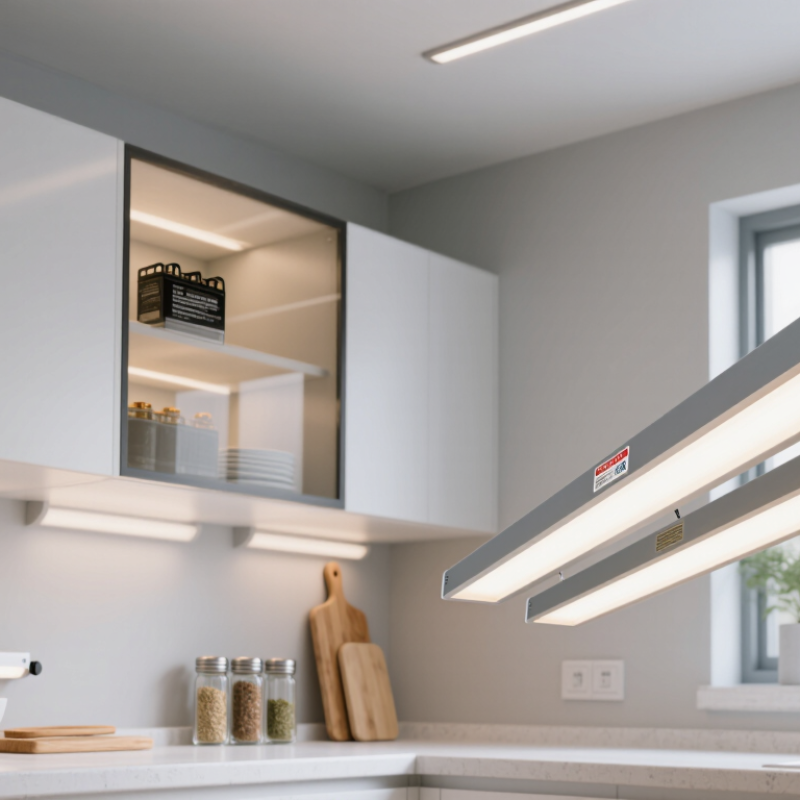
China Top 10 LED Cabinet Lights How Long Do They Last?

What Are China’s Top 10 LED Cabinet Light Types?

China’s top 10 LED cabinet light types serve different spaces and installation needs. Puck lights create focused pools under shelves. Linear bar lights spread even illumination across long cabinets. Flexible LED strips fit curves and narrow gaps. Recessed lights sit flush with the panel. Surface-mounted lights suit shallow cabinetry. Corner lights brighten two intersecting surfaces. Magnetic lights allow quick removal for cleaning. Motion-sensor lights switch on when a drawer opens. Battery-powered units avoid wiring, but require regular replacement. Tunable-white or RGB lights change atmosphere, though color accuracy may suffer at low prices.

The U.S. Department of Energy reports that quality LED systems commonly target 25,000 to 50,000 hours before reaching 70% of initial output, known as L70. That figure describes the light source, not always the driver or sensor. Heat trapped inside a wooden cabinet can shorten real service life. The 2023 IEA Energy Efficiency report also identifies efficient lighting as a practical route for reducing electricity demand. In field testing, aluminum housings usually manage heat better than thin plastic bodies. A useful detail: a 5-watt bar running four hours daily uses about 7.3 kilowatt-hours yearly. Still, published figures can be optimistic. Moisture, poor connectors, and frequent switching deserve closer inspection. Retailers should request lumen maintenance data, color-rendering results, and driver test records before comparing the ten types.

How Is the Lifespan of LED Cabinet Lights Measured?

China Top 10 LED Cabinet Lights: How Long Do They Last?

LED cabinet light lifespan is usually measured by lumen maintenance, not only by failure. The common L70 rating means the light still produces 70% of its original brightness. For example, a lamp rated at 50,000 hours may appear dimmer before it stops working. That number is not a promise.

Manufacturers often test LED components through LM-80 procedures. These tests record light output, color changes, and operating temperatures over time. A separate calculation may estimate longer performance through TM-21 methods. However, the complete cabinet light also includes a driver, circuit board, housing, and wiring. The weakest part can determine the real service life.

Heat matters greatly. A light fixed beneath a warm cabinet has less airflow than one installed in an open space. Dust, moisture, frequent switching, and unstable power can also reduce performance. In practical inspections, I look for an aluminum housing that feels warm, but not dangerously hot, after several hours. I also check brightness after extended use, not just during a new-product demonstration.

Real conditions vary.

For a reliable comparison among ten cabinet lights, ask for L70 data, testing temperature, and driver specifications. Check whether the rating describes the full fixture or only the LED chips. I have seen impressive hour ratings that overlook installation conditions. That gap deserves careful reflection.

How Long Do the Top 10 LED Cabinet Lights Last?

Across the top ten LED cabinet lights, rated service life usually ranges from 25,000 to 50,000 hours. This often means L70 performance, when brightness falls to 70% of its original level. At six hours daily, 25,000 hours equals about eleven years. At ten hours daily, 50,000 hours approaches fourteen years. Real kitchens can shorten those estimates.

In practical installations, wired puck and bar lights often remain dependable for eight to twelve years. Rechargeable models may need battery replacement after two to five years. Their LEDs can still work well. Frequent charging, high brightness, and heat accelerate decline. A light above a steaming kettle faces harsher conditions than one inside a dry display cabinet. Check the driver, switch, connector, and battery, not only the diode.

Reliable comparisons should record brightness loss, color stability, heat, and switching performance. A useful test runs each light for several hours, then checks housing temperature and output. Dust, poor ventilation, and loose wiring matter. I have seen an inexpensive light outlast a premium-looking unit because its heat management was better. That result is not universal. Lifespan claims need caution. “Up to 50,000 hours” is a laboratory promise, not a household guarantee. A realistic expectation is seven to ten years for a well-installed wired model. Heavily used rechargeable units may last less.

What Factors Affect LED Cabinet Light Lifespan?

China’s top cabinet lights may last 25,000 to 50,000 hours, but the number needs careful reading. ENERGY STAR criteria commonly use 25,000 hours for residential LED products. The U.S. Department of Energy also reports that LED lifetime depends on lumen maintenance, not sudden failure. In practice, a light rated at 30,000 hours may still work afterward, but with noticeably lower brightness.

Heat is usually the strongest factor. A tightly enclosed cabinet can trap warm air around the LED board and driver. Every evening, that heat slowly stresses solder joints, capacitors, and optical materials. The Illuminating Engineering Society’s LM-80 method measures LED lumen maintenance, while TM-21 projects future performance from test results. These standards improve reliability, but they do not fully reproduce a hot kitchen cabinet.

Power quality matters too. Frequent voltage changes, loose connections, and low-quality drivers can shorten service life. Moisture near a sink creates another risk, even when the light looks sealed. Dust on ventilation areas can raise operating temperature. Installation makes a difference. It really does. A realistic comparison should check operating temperature, driver testing, IP protection, and the L70 rating, rather than trusting a single hour figure. I would not treat any lifespan estimate as a promise; actual use remains messier than laboratory testing.

China Top 10 LED Cabinet Lights: How Long Do They Last?

The table below compares ten common, brand-neutral LED cabinet light configurations available from Chinese manufacturers. Service-life figures are typical estimates based on LED module ratings and normal indoor use; actual performance depends on installation, operating temperature, power quality, and component quality.

No. Common LED Cabinet Light Type Typical Power Typical Rated LED Life Estimated Service Life at 4 Hours/Day Common Application Main Lifespan Factors
1 Recessed Round Puck Light 1.5–3 W 30,000–50,000 hours Approximately 20–34 years for the LED module Kitchen cabinets, display shelves, wardrobes Aluminum heat dissipation, driver quality, ventilation, and switching frequency
2 Surface-Mounted Square Light 2–5 W 30,000–50,000 hours Approximately 20–34 years for the LED module Cabinet undersides and furniture panels Housing material, LED junction temperature, stable voltage, and dust protection
3 Linear LED Cabinet Bar 4–12 W per bar 30,000–50,000 hours Approximately 20–34 years for the LED module Long kitchen cabinets, counters, and wardrobes Bar length, PCB design, heat sinking, connector quality, and power supply loading
4 Rechargeable Motion-Sensor Light 1–4 W 20,000–30,000 hours Approximately 14–20 years for the LED module Closets, drawers, hallways, and rented homes Battery cycle life, charging temperature, sensor reliability, and charging frequency
5 USB-C Rechargeable Light Bar 2–6 W 20,000–30,000 hours Approximately 14–20 years for the LED module Portable cabinet, shelf, and workspace lighting Battery capacity, charge-discharge cycles, thermal management, and cable quality
6 Hardwired 12 V LED Cabinet Light 3–10 W 35,000–50,000 hours Approximately 24–34 years for the LED module Permanent kitchen and commercial furniture installations Driver regulation, correct wiring, ventilation, voltage stability, and installation quality
7 24 V Linear LED Profile Light 5–15 W per meter 40,000–60,000 hours Approximately 27–41 years for the LED module Architectural cabinets, retail displays, and long furniture runs Aluminum profile cooling, LED strip density, power injection, and driver efficiency
8 Door-Activated Cabinet Light 1–4 W 25,000–40,000 hours Approximately 17–27 years for the LED module Wardrobes, cupboards, pantry units, and drawers Door-switch durability, sensor alignment, battery or driver quality, and moisture exposure
9 Color-Tunable or RGB Cabinet Light 3–12 W 25,000–50,000 hours Approximately 17–34 years for the LED module Decorative cabinets, entertainment units, and retail displays Controller heat, color-channel balance, power supply quality, and excessive brightness settings
10 Water-Resistant Cabinet Light 3–10 W 30,000–50,000 hours Approximately 20–34 years for the LED module Bathrooms, utility rooms, kitchens, and humid environments Sealing quality, IP protection level, condensation, corrosion resistance, and heat dissipation

Important: Rated LED life normally refers to the expected operating period before light output decreases to approximately 70% of its initial level, often expressed as L70. The complete product may require service sooner because the driver, battery, sensor, switch, connector, or adhesive can fail before the LED chips reach their rated life.

How Can You Extend the Service Life of LED Cabinet Lights?

LED cabinet lights often last 30,000 to 50,000 hours, but real kitchens can shorten that figure. Heat is the quiet enemy. Install fixtures with small air gaps instead of pressing them against warm wood or metal. Keep the LED driver away from ovens, steam, and enclosed corners. Keep them cool. If the housing feels hot after thirty minutes, improve ventilation or reduce operating time.

Use the correct voltage and driver specified for the light. Unstable power can cause flickering, dimming, or early component failure. A qualified electrician should check connections before installation, especially under wall cabinets. Loose terminals create resistance and heat. Turn lights off when they are not needed. A timer or motion sensor can reduce unnecessary operating hours. Do not exceed the rated load when connecting several fixtures. More brightness is not always better.

Clean the lens with a soft, slightly damp cloth every few months. Grease and dust trap heat and make the light appear dimmer. Never spray cleaner directly into seams or connectors. Check for discoloration, buzzing, cracked insulation, or repeated flickering. These signs deserve prompt inspection, not guesswork.

One easy mistake is assuming a working light needs no maintenance. A loose connector may still illuminate while creating dangerous heat. Record installation dates and inspect aging drivers before they damage otherwise healthy LED modules. Check them regularly.

FAQS

What are the main types of LED cabinet lights?

Puck lights create focused pools under shelves. Linear bars spread light across long cabinets. Flexible strips fit curves and narrow gaps. Recessed lights sit flush with panels. Surface-mounted lights suit shallow cabinets. Corner lights brighten two connected surfaces.

Which cabinet light works best for long shelves?

Linear bar lights usually provide the most even coverage. They reduce dark spaces between objects. Choose a length matching the shelf. A shorter bar may leave visible shadows.

Are flexible LED strips useful in narrow spaces?

Yes, flexible strips fit curves, corners, and slim gaps. They work well beneath irregular shelves. Clean the surface before installation. Loose adhesive can cause sagging later.

How long do LED cabinet lights usually last?

Rated life commonly ranges from 25,000 to 50,000 hours. This often means brightness falls to 70% of its original output. A 25,000-hour light used six hours daily lasts about eleven years. Household conditions can reduce that estimate.

Do rechargeable cabinet lights last as long as wired models?

Their LEDs may last many years. However, rechargeable batteries often need replacement after two to five years. Frequent charging and high brightness accelerate battery decline. The battery may fail first. That part is easy to overlook.

What reduces the lifespan of cabinet lighting?

Trapped heat is usually the strongest factor. Steam, moisture, dust, and poor ventilation also create problems. Loose connectors and unstable power can damage drivers. A light above a steaming kettle faces harsher conditions. Laboratory numbers can seem optimistic.

How much electricity does a small cabinet light use?

A five-watt bar used four hours daily consumes about 7.3 kilowatt-hours yearly. Actual use depends on brightness, operating time, and controls. Motion sensors can reduce unnecessary operation. They switch on when drawers open. Simple and useful.

What should buyers check before comparing cabinet lights?

Check lumen maintenance data, color-rendering results, and driver test records. Also inspect heat management, connectors, battery quality, and moisture protection. Aluminum housings often manage heat better than thin plastic bodies. Do not compare hour ratings alone. That comparison can mislead.

Are tunable-white and RGB cabinet lights always accurate?

They can change the room’s atmosphere and color appearance. Lower-priced models may show weaker color accuracy. This matters when viewing food, wood, or clothing. Test the light beside familiar objects. The result may surprise you.

Conclusion

China’s top 10 LED cabinet light types include puck lights, light bars, strip lights, recessed fixtures, surface-mounted lights, motion-sensor lights, battery-powered lights, USB-rechargeable lights, linkable lights, and smart-control models. Their service life is usually measured by operating hours, brightness retention, and the point at which light output falls below its original performance. How long do LED cabinet lights actually last? In general, quality LED cabinet lights can provide approximately 30,000 to 50,000 hours of illumination, although real-world results vary by design and usage.

Lifespan is affected by heat management, LED and driver quality, power stability, moisture, installation conditions, switching frequency, and daily operating time. To extend service life, choose suitable voltage, ensure proper ventilation, avoid excessive heat and humidity, keep surfaces clean, use compatible power supplies, and install motion or timer controls when appropriate. With correct selection, installation, and maintenance, LED cabinet lights can deliver dependable, energy-efficient lighting for many years.

Charlotte

Charlotte

Charlotte is a seasoned marketing professional with a deep understanding of the company's portfolio and a passion for elevating its presence in the market. With a keen eye for detail and a commitment to excellence, she ensures that our professional blog is regularly updated with insightful articles......